
What Is ADAS? Advanced Driver Assistance Systems Explained
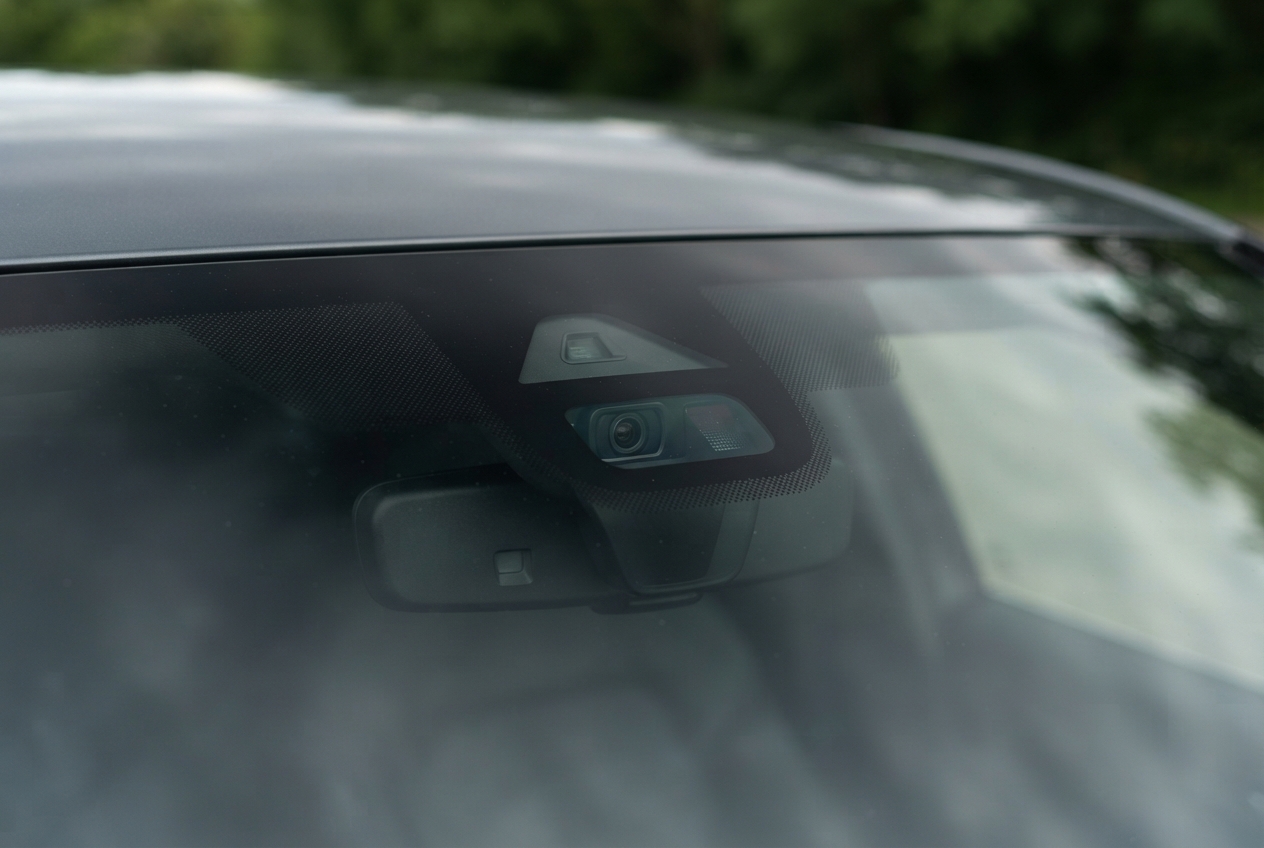
ADAS stands for Advanced Driver Assistance Systems: the cameras, radars and sensors that help a car warn you, brake and steer. If your car can brake by itself in an emergency, hold its lane or keep a set distance from the car in front, it has ADAS.
What ADAS Actually Does
ADAS does not drive the car for you. It watches the road alongside you and steps in when it detects a risk you may have missed. Common functions are:
- Autonomous emergency braking (AEB): brakes if a collision with a vehicle or pedestrian looks likely.
- Lane departure warning and lane keep assist: warns you, or steers gently, when the car drifts out of its lane.
- Adaptive cruise control: holds a set gap to the vehicle ahead.
- Traffic sign recognition: reads speed signs and shows them on the dash.
- Automatic high beam: dips the headlights for oncoming traffic.
- Blind spot monitoring and rear cross traffic alert: watch the areas you cannot easily see.
Where the Sensors Are
Most cars use a mix of three sensor types.
The forward camera
This is the one that matters most for auto glass. It sits behind the top of the windscreen, usually in the housing around the rear-view mirror, and looks through the glass. It reads lane markings, vehicles, pedestrians and road signs.
Radar
Radar units are normally mounted behind the front grille or bumper, and in the rear corners for blind spot monitoring. They measure distance and closing speed.
Ultrasonic sensors and other cameras
The small round sensors in the bumpers handle parking. Reversing and surround-view cameras are mounted in the tailgate, mirrors and grille.
Why ADAS Is Now Standard Equipment
ADAS is no longer an option on expensive cars. Under Australian Design Rule 98/00, autonomous emergency braking has been required on newly introduced light vehicle models since March 2023 and on all new light vehicles sold since March 2025. In practice, almost every car built in the last few years has a camera looking through its windscreen.
Why ADAS Needs Calibrating
A forward camera is aimed with great precision. It assumes it knows exactly where it sits and exactly where it points. Change the windscreen, the camera bracket, the ride height or the wheel alignment and that assumption can be wrong by a fraction of a degree. At 50 metres down the road, a fraction of a degree is a long way.
Calibration is the process of teaching the camera or radar its exact position again, using the vehicle maker’s procedure. We explain the two methods in static vs dynamic ADAS calibration.
ADAS and Your Windscreen
Because the main camera looks through the glass, a windscreen is now part of the safety system. That is why a replacement on a camera-equipped car involves the right glass, a correctly positioned bracket and a calibration afterwards. See why ADAS calibration matters for what can go wrong when it is skipped.
Calibration by a Certified Provider
Aussie AutoGlass is now a certified ADAS calibration service provider: our technicians have completed the calibration equipment manufacturer’s training and certification, and we carry out static or dynamic calibration as each vehicle requires. If your car has a camera behind the windscreen, tell us when you book and we will confirm what your vehicle needs. Call 0405 412 951 or book an appointment.
Frequently Asked Questions
How do I know if my car has ADAS?
Look for a camera housing behind the rear-view mirror, lane or collision warning symbols on the dash at start-up, and buttons for lane assist or adaptive cruise on the steering wheel. Our guide on how to tell if your windscreen has a camera or sensor goes through it.
Is ADAS the same as self-driving?
No. ADAS assists a driver who stays in control and responsible at all times.
Can I turn ADAS off?
Many functions can be switched off in the vehicle settings, but most switch back on at the next start. Turning a function off does not remove the need to calibrate it after a windscreen replacement.