
Why ADAS Calibration Matters for Your Safety
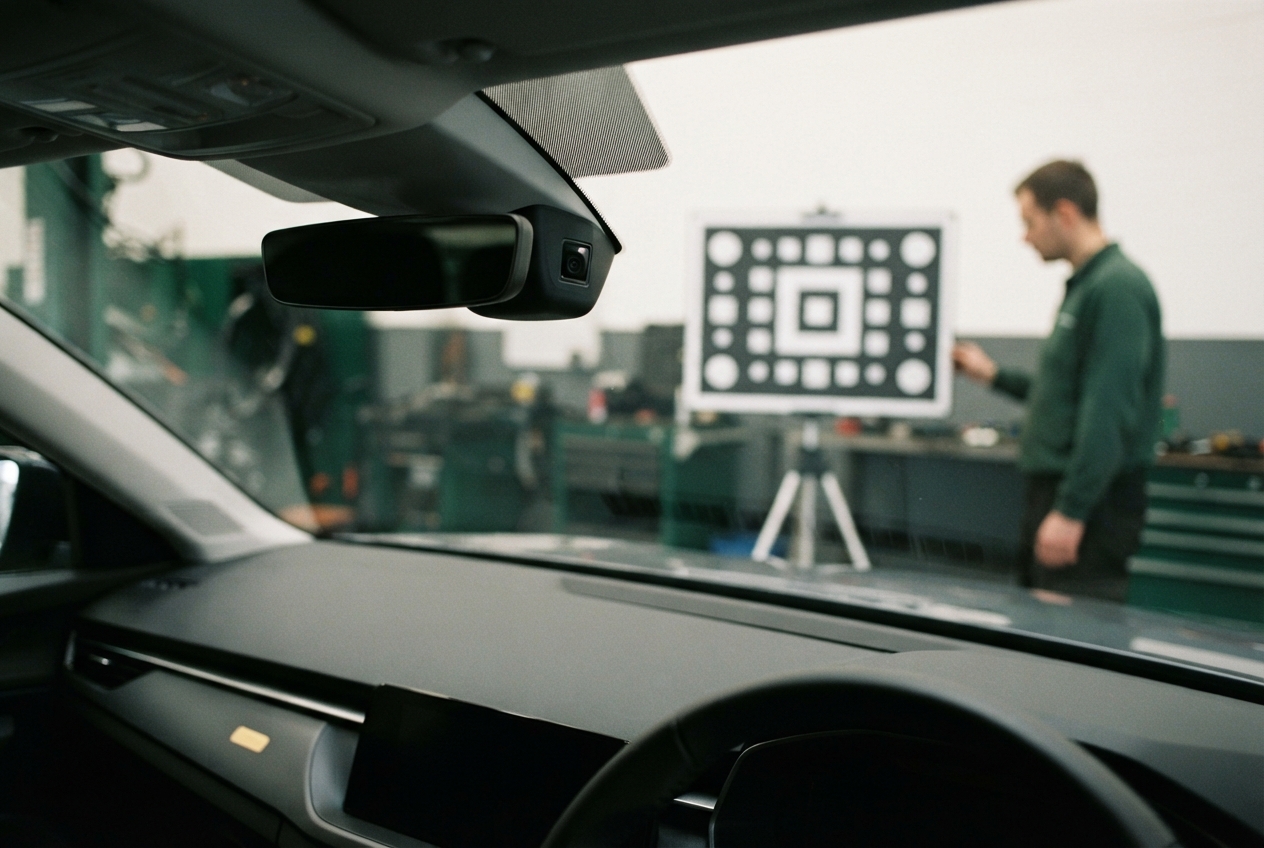
ADAS calibration matters because your car’s safety systems act on what the camera and radar believe they see. If a sensor is aimed even slightly wrong, the car can brake late, steer when it should not, or stop helping altogether.
Small Errors, Long Distances
A forward camera judges where the lane is and how far away the car ahead is. It does that from a fixed mounting point behind the windscreen. If that mounting point moves, even by a millimetre or a fraction of a degree, the error grows with distance. What is a hair’s width at the glass can be more than a car’s width far down the road.
What Can Go Wrong
Late or missed emergency braking
Autonomous emergency braking works out the distance and closing speed of what is ahead. A camera that looks slightly too high or to one side can misjudge both.
Unwanted steering or warnings
Lane keep assist steers gently towards what it believes is the lane centre. If the camera’s idea of straight ahead is off, the car can nudge you towards the line, or warn you constantly on a road where you are driving perfectly well.
Systems that switch themselves off
Many cars notice that something is not right and disable the function, showing a warning on the dash. That is safer than acting on bad information, but it means you have paid for safety equipment that is not working. See ADAS warning lights after a windscreen replacement.
No warning at all
The hardest case is a camera that is slightly out but still within the range the car accepts. Nothing lights up, and the system works a little worse than it should. Only a calibration to the maker’s procedure settles it.
When Calibration Is Needed
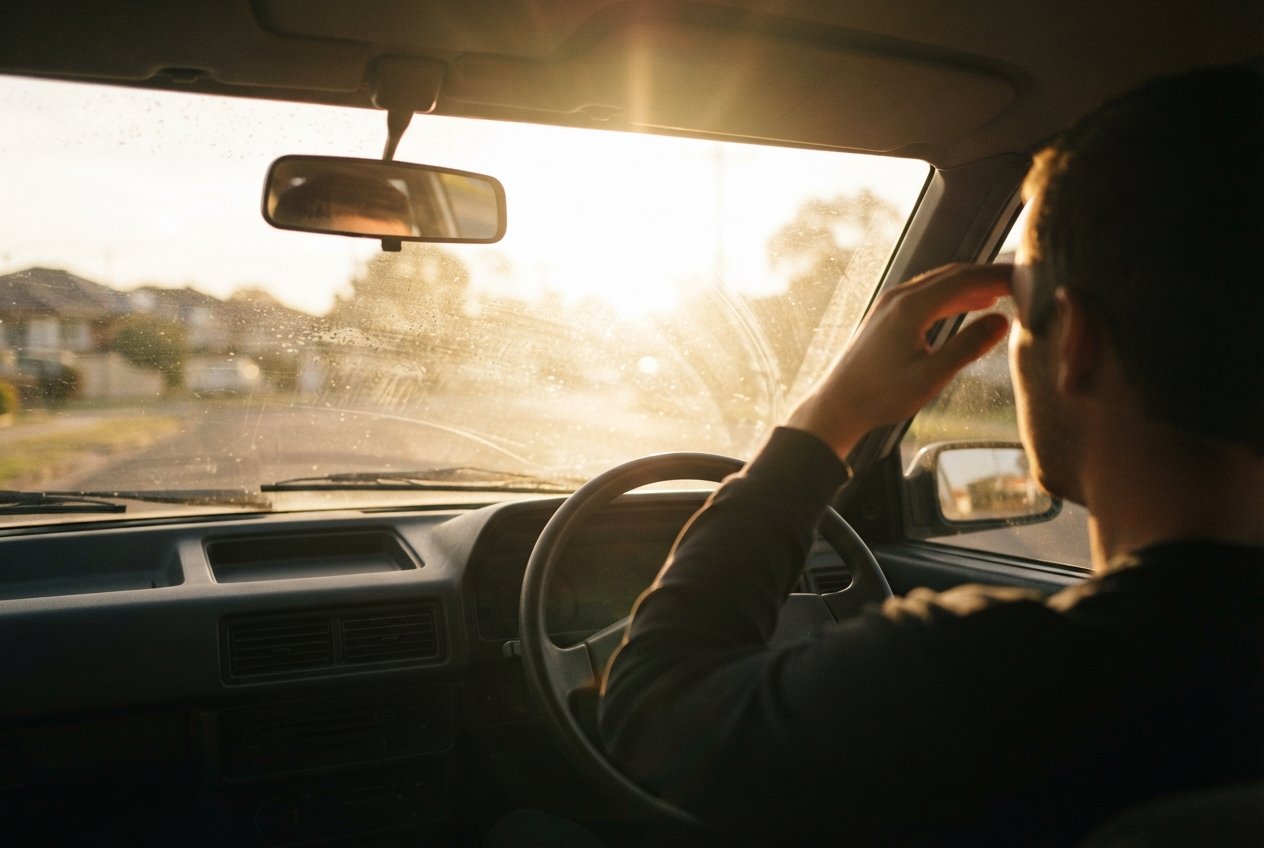
Vehicle makers typically call for calibration after:
- a windscreen replacement on a car with a forward camera
- removal or refitting of the camera or its bracket
- a collision or front-end body repair
- suspension work or a change in ride height
- a wheel alignment, on many models
- a stored calibration fault
We cover the non-glass causes in ADAS calibration after a wheel alignment or suspension work.
Why It Matters More Each Year
Autonomous emergency braking has been required on all new light vehicles sold in Australia since March 2025 under Australian Design Rule 98/00. As the cars on the road get newer, more of them depend on a camera that looks through the windscreen, and more windscreen replacements need a calibration to finish the job properly.
It Is Part of the Repair, Not an Extra
It helps to think of calibration the way you think of a wheel alignment after new steering parts: the job is not finished until it is done. A new windscreen with an uncalibrated camera looks complete, but the car is not back to the condition it left the factory in.
Who Should Do It
Calibration needs the correct targets and diagnostic equipment, a suitable space, and a technician trained to follow each maker’s procedure. Aussie AutoGlass is a certified ADAS calibration service provider. Our technicians are trained and certified by the manufacturer of our calibration equipment, and we do static and dynamic calibration, depending on what the vehicle maker specifies. To book, call 0405 412 951 or request an appointment online.
Frequently Asked Questions
Will my car tell me if the camera needs calibrating?
Sometimes. A warning light is a clear sign, but the absence of one is not proof that everything is right.
Does calibration take long?
It depends on the vehicle and the method. We tell you what to expect when you book. See what happens during an ADAS calibration appointment.
How much does it cost?
It is quoted by vehicle, because the procedure differs between makes and models. Ask us for a quote with your windscreen replacement.