
ADAS Calibration After a Wheel Alignment or Suspension Work
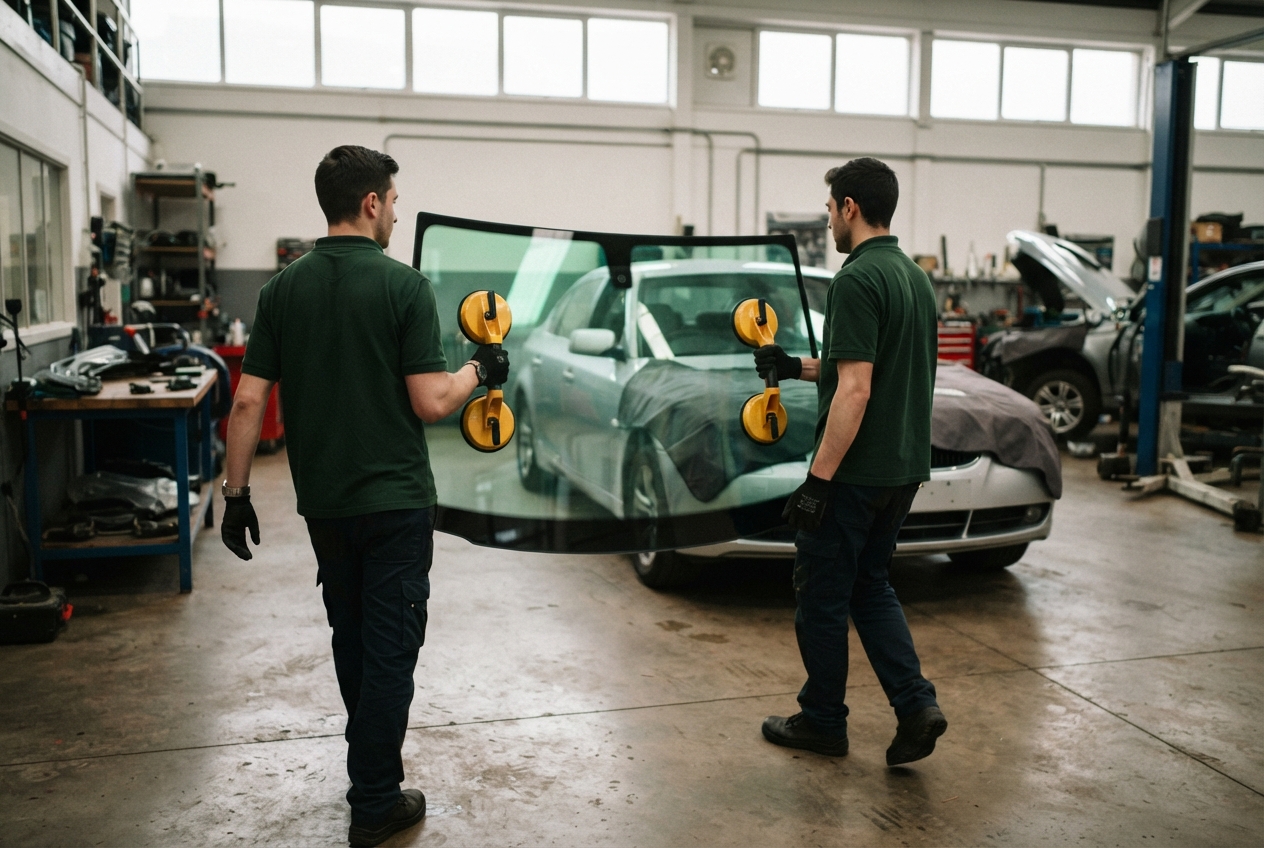
A windscreen replacement is the most common reason for ADAS calibration, but it is not the only one. Anything that changes how the car sits on the road or which way it travels can affect the sensors, and many vehicle makers call for calibration after a wheel alignment or suspension work.
Why Alignment and Suspension Matter
A forward camera is fixed to the body of the car. It assumes the body points the same way the car travels and sits at a known height and angle. Two things can upset that.
The direction the car travels
Wheel alignment sets the angles of the wheels. If the rear wheels are not square to the body, the car travels slightly crabwise: the body points one way while the car goes another. The line the car actually follows is called the thrust line. A camera calibrated to the body will then look slightly to one side of where the car is going.
How the car sits
New springs, worn suspension, a lift or lowering kit, different tyre sizes and even heavy loads change the height and tilt of the body. The camera and radar tilt with it, so they look higher or lower down the road than they were set up to.
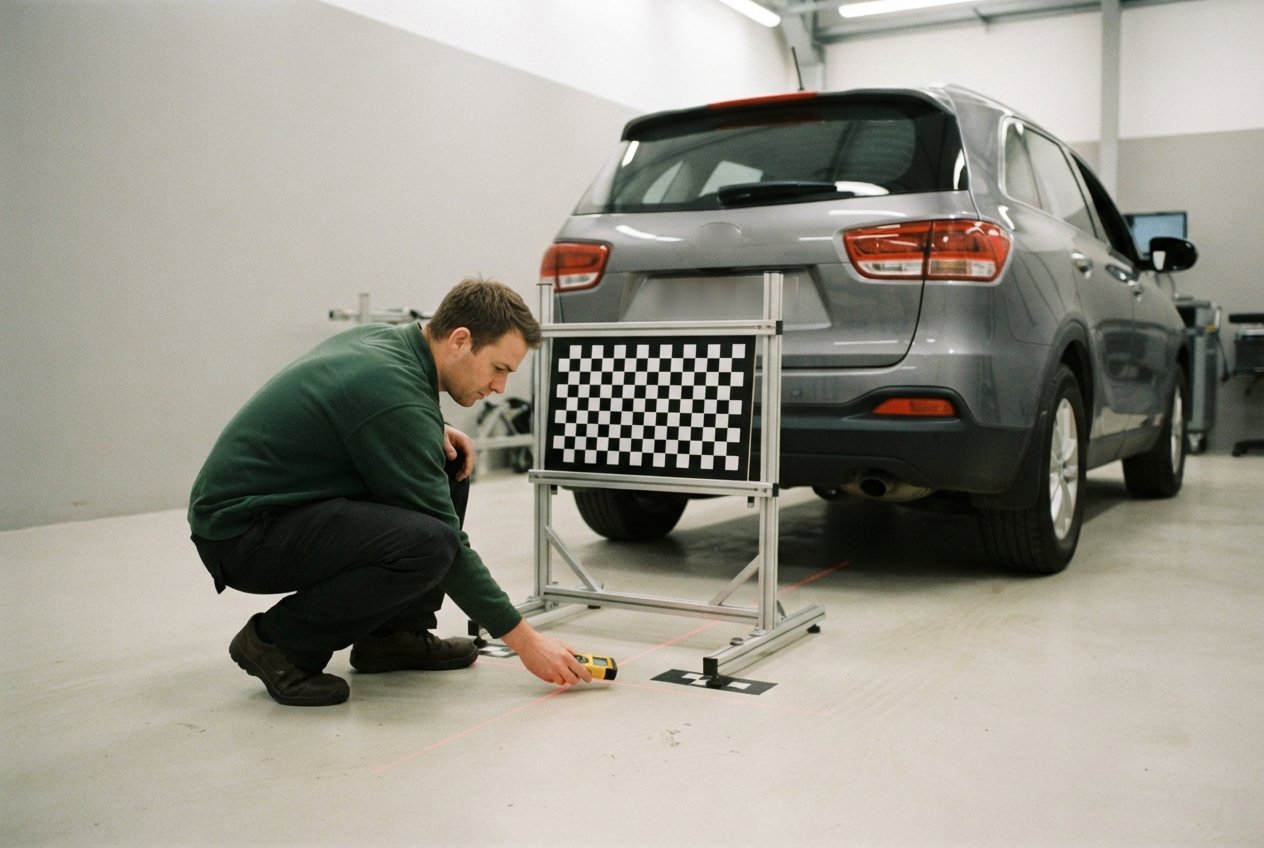
Work That May Call for Calibration
Check your vehicle maker’s requirements, but calibration is commonly specified after:
- a four-wheel alignment
- replacement of suspension or steering components
- a change in ride height, including lift and lowering kits
- a change to a different tyre or wheel size
- steering angle sensor replacement or reset
- front-end body repairs
The Right Order
When more than one job is being done, order matters:
- Repairs first. Body, suspension and steering work.
- Alignment next. So the car tracks straight.
- Calibration last. So the sensors are set to the car as it will be driven.
Calibrating before an alignment risks doing it twice. If you are having a windscreen replaced and an alignment done around the same time, tell us so the calibration can be timed sensibly.
How to Tell if Something Has Shifted
After suspension or alignment work, watch for lane assist that pulls to one side, collision warnings with nothing ahead, or adaptive cruise following the wrong vehicle. We list more in signs your ADAS camera is out of calibration.
How We Can Help
Aussie AutoGlass is a certified ADAS calibration service provider. Our technicians are trained and certified by the manufacturer of our calibration equipment, and we do static and dynamic calibration, depending on what the vehicle maker specifies. If you have had work done elsewhere and a driver-assistance warning has appeared, or the systems feel different, we can check the calibration of the windscreen camera. Call 0405 412 951 or book an appointment.
Frequently Asked Questions
Does every wheel alignment need a calibration afterwards?
No. It depends on the make and model. Some makers require it, some recommend it and some do not mention it. We check the procedure for your vehicle.
I only had two new tyres fitted. Does that matter?
Like-for-like tyres at the correct pressure do not normally call for calibration. A change of size, or very uneven wear between old and new tyres, can make a difference on some cars.
My car has a lift kit. Can it still be calibrated?
Often yes, but it depends on the vehicle and how far it has been changed. See ADAS calibration for utes and 4WDs.