
Mastering Vehicle Glass Damage Assessment: Expert’s Guide to Precision Analysis

Every road warrior knows the feeling: you’re cruising along, enjoying a sunny day drive, when suddenly, a rogue pebble catapults into your windshield, leaving an unwelcome crack in its wake. It’s a scenario that leaves many drivers scratching their heads about the extent of the damage, the time required for repairs, and the costs involved. But what if understanding and evaluating vehicle glass damage could be as straightforward as changing a flat tire? Welcome to the realm of vehicle glass damage assessment, where precision analysis meets practical know-how, offering you the tools to tackle these everyday challenges with confidence.
In this expert’s guide, we delve deep into the nuances of assessing glass damage, moving beyond the superficial inspection and teaching you how to evaluate the underlying implications of every chip and crack. With insights garnered from industry professionals and the latest technical advancements, you’ll learn to master the art of distinguishing between repairable damage and cases requiring full replacements. By the end of this journey, you’ll not only be equipped with the knowledge to safeguard your vehicle’s integrity but also empowered to make informed decisions, saving both time and money.
Understanding Vehicle Glass Damage: Types and Causes

Vehicle glass damage assessment begins with recognizing the various types of harm that can afflict windshields and side windows. The most common types include bullseye breaks—circular impact points with a dark ring around them—star breaks, which radiate spokes outward from the impact site, and combination breaks that exhibit traits of both. Chips are shallow depressions often created by small stones or gravel kicked up at high speed, whereas stress cracks form over time due to temperature fluctuations or improper installation. Edge cracks, which start at the perimeter of the glass, pose a greater risk of propagation and can compromise structural integrity more rapidly than centrally located damage.
Understanding the causes behind these blemishes is equally important for accurate analysis. High-velocity road debris, such as pebbles or fragments of asphalt, is responsible for most chips and bullseye breaks. Rapid temperature changes—parking under direct sun after a cold night—can induce stress cracks as the glass expands unevenly. Manufacturing defects, such as uneven laminating of the inner plastic interlayer, can lead to spontaneous delamination or microfractures. Even the subtle flex of a vehicle frame over rough terrain can stress the windshield, causing tiny fissures to form. A comprehensive grasp of both types and causes lays the foundation for a precise vehicle glass damage assessment and effective remediation strategy.
The Importance of Prompt Evaluation in Glass Damage Assessment

Time is a critical factor when it comes to windshield and window damage. A minor chip can expand into a large crack within hours of being incurred, especially under the influence of road vibrations, temperature variations, or even a sudden jolt from a speed bump. Prompt evaluation ensures that damage is identified before it escalates, potentially reducing the need for full glass replacement and enabling a more cost-effective repair.
Beyond cost savings, quick assessment is key to maintaining safety. Even small blemishes can impair driver visibility, particularly when they’re located within the driver’s line of sight. Moisture, dirt, and UV exposure can worsen untreated chips and cracks, making them harder to repair later. By acting swiftly, you maximize the likelihood of successful repair, preserve structural integrity, and uphold the vehicle’s crash-resistance properties—core objectives in professional vehicle glass damage assessment.
Tools and Equipment for Accurate Glass Damage Analysis
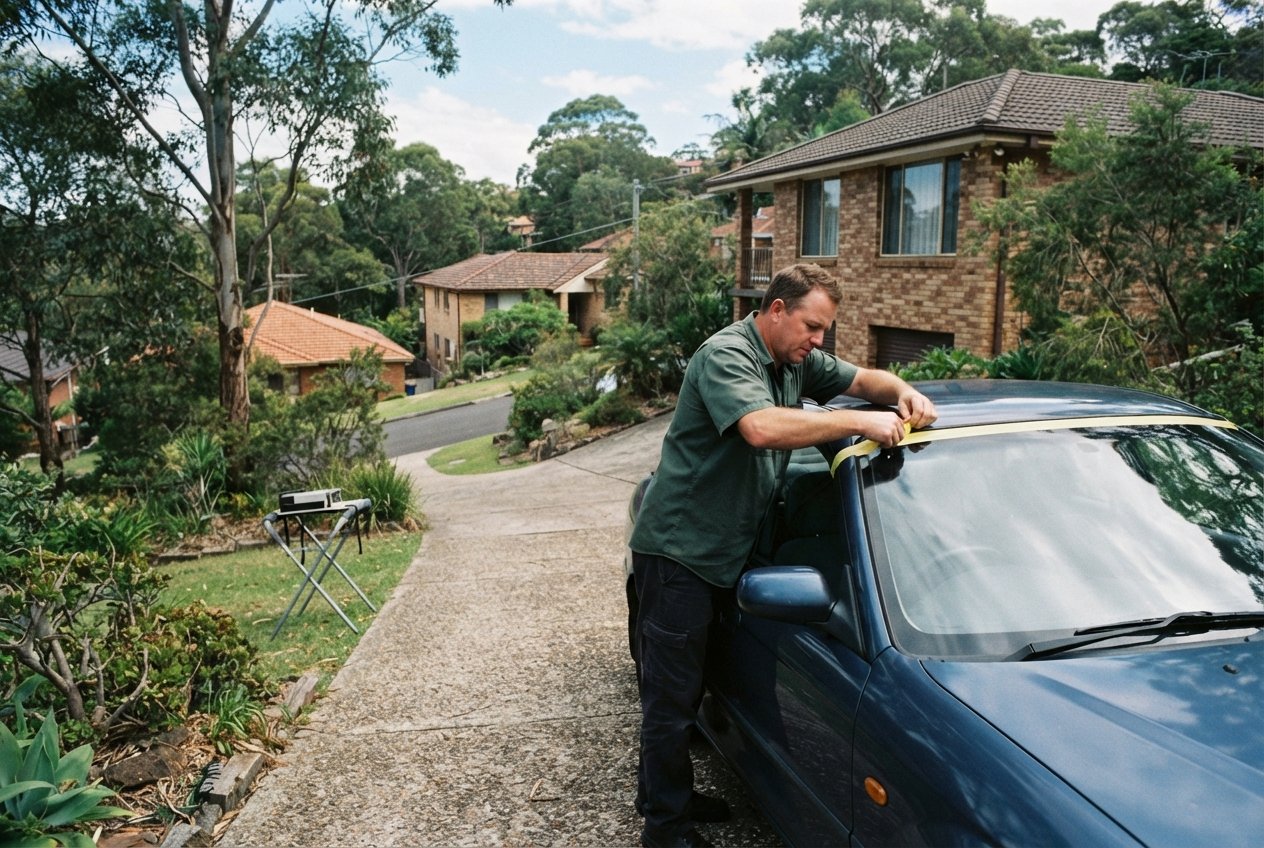
Accurate glass damage analysis relies on a toolkit of specialized instruments and equipment. At a minimum, a high-quality magnifier or loupe helps pinpoint the nuances of chip and crack morphology, revealing subtle fissures that might otherwise go unnoticed. A depth gauge or crack bridge gauge measures the penetration of damage into the laminated layers, distinguishing shallow chips from deeper fractures that threaten the glass’s strength.
Advanced workshops often employ portable digital microscopes and high-resolution cameras to document damage for insurance claims or technical records. UV lamps can be used to detect invisible micro-fractures and to evaluate the effectiveness of resin infiltration during repairs. Light boards, which provide uniform backlighting, make it easier to visualize hairline cracks and stress patterns. Together, these tools form the backbone of any thorough vehicle glass damage assessment, ensuring that no detail goes unexamined.
Techniques for Assessing Chip Damage on Windshields
Assessing chip damage starts with cleaning the area around the impact to remove dust, dirt, and fragments. This initial step ensures an unobstructed view of the chip’s shape and size. Next, a calibrated chip gauge is placed directly over the damage to measure diameter and depth, which are crucial parameters in determining repairability.
Another common technique involves using a white dye or chalk to highlight micro-cracks that radiate from the chip. Photographing the chip under various angles and lighting conditions—using a ring light or adjustable LED panel—provides a record for later comparison, especially if the chip propagates into cracks over time. Combining these methods allows technicians to formulate a precise estimate of repair difficulty and timeline, reinforcing the principles of expert vehicle glass damage assessment.
Evaluating Cracks in Vehicle Glass: Size, Shape, and Location Matters
Not all cracks are created equal. The length, configuration, and placement of a crack influence both the choice of repair method and the likelihood of successful restoration. Short cracks—those under three inches—often fall within industry guidelines for safe repair. However, long cracks, especially those exceeding six inches, present a higher risk of spreading and may necessitate full replacement.
The crack’s path is just as telling. Straight cracks that don’t intersect other damage can sometimes be filled and sealed effectively, while star or branching cracks pose challenges due to multiple fracture lines. Location is also critical: cracks at the edge of the windshield compromise the bonding surface and can undermine structural strength, whereas those in the driver’s sightline may require replacement for safety reasons. By evaluating these nuances, professionals practice precision in vehicle glass damage assessment and deliver tailored solutions.
Distinguishing Repairable Damage from Irreparable Ones
In a repair shop, every chip and crack undergoes a quick triage: is this a candidate for resin injection, or does it demand full glass replacement? Common criteria include damage size, proximity to the edge, location in the driver’s view, and depth penetration into the interlayer. Industry standards often allow repair of chips up to one inch in diameter and cracks under three inches, provided they are centrally located and don’t break the outer layer completely.
Irreparable damage typically includes chips fused with dirt or oil, cracks that have spread into the frame’s seal, or fractures that compromise more than one layer of the laminated glass. When these conditions are met, attempting repair may yield subpar results and pose safety risks. Recognizing the difference between repairable and irreparable damage is a cornerstone skill in advanced vehicle glass damage assessment.
Advanced Methods for Assessing Glass Damage Severity
While visual inspection and gauges serve well for routine cases, advanced methods cater to complex scenarios. Ultrasonic testing, originally developed for metal integrity checks, can detect internal delamination or air pockets within the interlayer. Infrared thermography highlights subtle temperature differences across the glass, revealing fissures invisible under normal light.
Some high-end facilities utilize 3D scanning and finite element analysis (FEA) to model stress distribution around damage sites, predicting crack propagation under various loading conditions. Artificial intelligence and machine learning are also making inroads, with software analyzing images of damage to recommend repair or replacement automatically. These cutting-edge techniques exemplify how modern vehicle glass damage assessment continues to evolve toward higher precision.
Factors Influencing the Decision Between Repair and Replacement
Deciding whether to repair or replace vehicle glass involves weighing multiple factors. Safety remains paramount: damage that compromises the windshield’s structural role in roof support or airbag deployment zones typically necessitates replacement. Location, size, and orientation also play pivotal roles, as does the driver’s field of vision—any blemish that impairs clear sight demands immediate attention.
Insurance coverage and deductible considerations often tip the balance. Many policies cover repairs with no out-of-pocket cost up to a certain damage size, whereas replacements may incur higher premiums. Environmental impact and time constraints further influence the choice. Repairing glass uses fewer materials and is faster, but replacement can restore full OEM integrity. Balancing these elements ensures a well-informed outcome in every vehicle glass damage assessment.
Cost Considerations in Vehicle Glass Damage Assessment
Repair costs vary based on damage type, size, and technician expertise. Stone chip and crack repairs start from $165 (see our windscreen cost guide). Any insurance excess depends on your individual policy, so it’s worth checking your policy documents or asking your insurer. Some insurers offer glass-only policies that waive deductibles for replacements. Factoring in potential hidden costs—mobile service fees, recalibration of ADAS sensors, or disposal of old glass—ensures a realistic budget. A nuanced approach to cost considerations is essential for prudent vehicle glass damage assessment and financial planning.
Conclusion: Empowering Yourself with Expertise in Glass Damage Assessment
Mastering vehicle glass damage assessment empowers you to tackle chips and cracks with precision, safeguarding both safety and wallet. By understanding damage types, leveraging proper tools, and applying advanced techniques, you gain confidence in deciding between repair and replacement.
Armed with this guide, you’re ready to evaluate glass damage like a professional, ensuring clear visibility, structural integrity, and cost-effective maintenance every time you hit the road.