
How China’s glass exports affect windscreen prices in Australia

Every time you drive your car, you might not give much thought to the glass barrier that shields you from the elements and unexpected road debris. However, behind the clarity of that windscreen lies a complex global trade network, where every pane of glass has a story stretching back to bustling factories half a world away. The journey of these glass components, from production lines in China to installation in Australian vehicles, is not just about logistics; it holds significant implications for windscreen prices across Australia.
In recent years, China’s role as a dominant player in global manufacturing has expanded into diverse markets, including automotive glass. As Australia leans heavily on these imports, fluctuations in China’s production costs, trade policies, and international relations can all ripple through to the end consumer. Understanding how China’s glass exports affect windscreen prices in Australia provides insight into broader economic dependencies and highlights the delicate balance between global supply chains and local demand. Dive into this fascinating intersection of global commerce and everyday life, where geopolitics and economics meet the practical concerns of keeping our roads safe and our travels smooth.
The Rise of China as a Global Glass Exporter

Over the past three decades, China has transformed from a modest regional glass producer into the world’s largest exporter of various glass products—including architectural panes, container glass, and specialized automotive windscreen panels. State-backed investments, aggressive capacity expansion, and an emphasis on modernizing furnace technologies enabled Chinese glassmakers to flood global markets with competitively priced offerings. By 2020, China accounted for nearly half of the world’s flat glass production, outpacing traditional leaders like Europe and North America.
China’s rapid industrialization and integrated value chains allow raw materials—silica sand, soda ash, limestone—to flow seamlessly into high-volume glass factories. Leveraging abundant labor, economies of scale, and government subsidies, Chinese manufacturers can offer FOB prices that undercut many international competitors. Major glass producers such as Fuyao, Xinyi, and CSG dominate export corridors to Asia, Europe, and beyond. As these companies refine their processes and invest in R&D for laminated, tempered, and solar-control glass, they solidify China’s reputation as both a low-cost provider and an innovator in the global glass market.
Given this backdrop, Australia’s importers and automotive service providers have come to rely on the steady stream of affordable Chinese windscreen glass. This dependence has profound implications: any shift in China’s production landscape—be it regulatory tightening, energy constraints, or shifts in export strategy—can reverberate through to the final price consumers pay at the repair shop.
Factors Influencing China’s Glass Production Costs
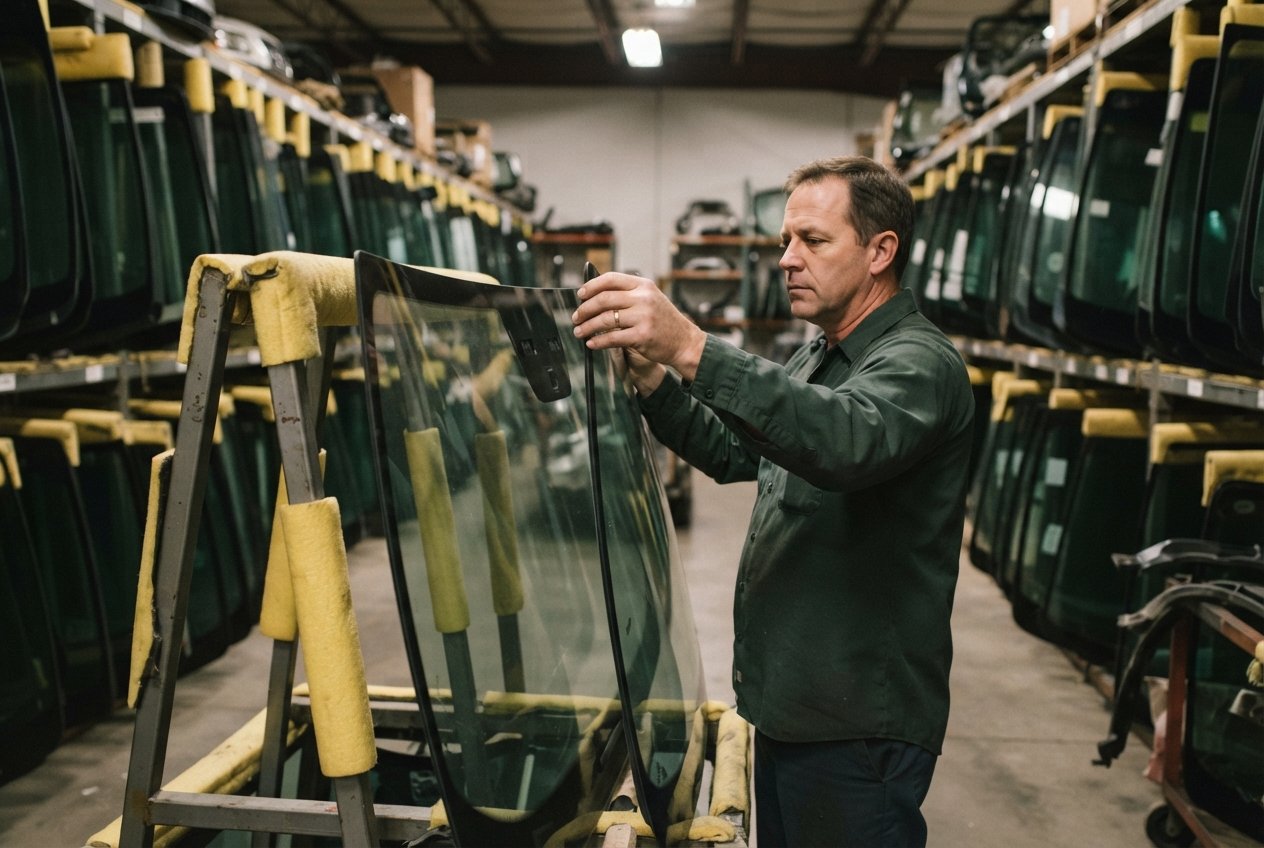
China’s ability to supply low-priced windscreen glass stems from multiple cost advantages. Firstly, abundant natural resources and proximity to silica sand deposits reduce raw material expenses. Major glass hubs in Hebei and Shandong provinces benefit from integrated supply networks, where mining, refining, and manufacturing co-locate to minimize transport costs.
Secondly, energy remains a cornerstone of glassmaking. China’s access to coal-fired power, coupled with long-term supplier agreements, keeps electricity and fuel costs comparatively low. Although the government has introduced environmental regulations to curb emissions—prompting some plants to adopt cleaner but costlier technologies—the overall energy expense still favors Chinese producers over many Western counterparts.
Labor costs in China have risen steadily, yet they remain competitive for heavy manufacturing. Long-term government support in the form of tax breaks, infrastructure investment, and export rebates further offsets operational expenditures. Automation and continuous melting technologies also drive down per-unit production costs by maximizing furnace efficiency and reducing downtime. These combined factors—raw material proximity, favorable energy pricing, manageable labor rates, and government incentives—form the bedrock of China’s cost leadership in the global glass market.
Impact of Trade Policies on Chinese Glass Exports

Trade policies can dramatically alter the economics of glass imports for countries like Australia. Over the last decade, China’s entry into the WTO and subsequent bilateral agreements opened new export avenues. Reduced tariffs under free-trade agreements with ASEAN and other partners have bolstered China’s competitive edge.
Conversely, periodic anti-dumping investigations and safeguard measures have arisen in markets where local producers felt threatened. For instance, the European Union and the United States have at times imposed duties or quotas on Chinese flat glass, prompting exporters to pivot toward more receptive markets such as Australia and Southeast Asia. Such policy shifts can introduce volatility in export flows, affecting both availability and pricing for downstream customers.
In Australia, the lack of significant domestic flat-glass manufacturing has limited the government’s appetite for protectionist measures. However, Australia’s ongoing free-trade agreement with China has generally kept tariffs low, enabling a near-continuous supply of automotive glass. Any future renegotiation of trade terms or imposition of environmental compliance standards could influence how China’s glass exports affect windscreen prices in Australia, potentially introducing higher costs at the point of installation.
International Relations and Their Effect on Glass Exports
Diplomatic ties and geopolitical tensions play an outsized role in the global flow of manufactured goods. The trajectory of China’s glass exports is shaped not only by commercial considerations but also by its relationships with major importers. Strained relations with the U.S. during tariff disputes saw some Chinese glassmakers lose access to one of their largest markets, redirecting shipments to other regions—including Australia.
Shipping routes, port access, and customs clearance protocols can all be affected by evolving diplomatic stances. For example, heightened scrutiny at ports over content origin or quality certifications can introduce delays and add compliance costs. In some instances, container shortages or rerouted vessels due to regional sanctions have temporarily constrained supply, contributing to price spikes abroad.
On the flip side, proactive engagement through forums such as the Asia-Pacific Economic Cooperation (APEC) has facilitated smoother trade channels. Improved transparency in product standards and shared certification regimes help expedite customs processing. As Australia and China navigate economic and political ebbs and flows, the degree of cooperation or friction directly influences how China’s glass exports affect windscreen prices in Australia—either stabilizing them or subjecting them to unpredictable swings.
Australia’s Reliance on Imported Automotive Glass
Australia’s automotive glass industry is heavily import-driven. With the decline of local vehicle manufacturing over the past two decades, domestic production of specialized glass panels has diminished correspondingly. Today, the vast majority of automotive windscreens, side windows, and rear glass units installed in Australia originate overseas, with China accounting for a significant portion of these imports.
This reliance stems partly from cost considerations—Australian factories cannot match the per-unit economies of scale achieved by Chinese producers. Additionally, the complexity of modern laminated and tempered glass, often featuring embedded sensors or acoustic layers, favors large, specialized Chinese facilities investing in advanced manufacturing technologies. As a result, local repairers and dealerships procure bulk orders of glass components from Chinese suppliers to maintain competitive pricing and meet consumer demand.
While there are niche Australian firms that import European or Japanese-made glass for luxury vehicles, the mainstream market leans on Chinese glass for most common models. This dynamic underscores how China’s glass exports affect windscreen prices in Australia: any disruption in that supply chain—from logistic bottlenecks to sudden policy shifts—can cause immediate cost ripples in the local market, impacting the final invoice for motorists.
Fluctuations in Windscreen Prices in Australia
Windscreen replacement costs in Australia are subject to constant fluctuation, driven largely by the underlying price of imported glass. When Chinese production costs rise—due to environmental levies, energy price hikes, or currency shifts—those increased expenses tend to pass through to Australian importers. Similarly, global shipping rates, insurance premiums, and port handling fees can introduce volatility.
Seasonality also plays a role. Severe weather events, such as hailstorms in Queensland or bushfire smoke-related breakages, can trigger surges in demand for replacement windscreens. During these peaks, importers may scramble to source additional inventory, sometimes paying premiums for expedited shipping or last-mile logistics. Conversely, periods of low demand can lead suppliers to offer discounts or bundled pricing to clear warehouse stock, benefiting repair shops and consumers alike.
Insurance arrangements add another layer of complexity. Policyholders with comprehensive coverage may face lower out-of-pocket expenses, but insurers will negotiate bulk rates with glass importers and fitting centers. Over time, these negotiated rates influence market pricing trends. Ultimately, the interplay of Chinese export pricing, shipping costs, local demand spikes, and insurance structures dictates how China’s glass exports affect windscreen prices in Australia, making the final figure at the workshop counter the result of a multifaceted global equation.
Economic Dependencies in Global Supply Chains
Australia’s dependence on Chinese glass imports illustrates broader vulnerabilities inherent in global supply chains. When a single country supplies the lion’s share of a critical component—like automotive windscreen glass—any disruption can reverberate across manufacturing, service, and consumer segments. Events such as factory shutdowns due to COVID-19 lockdowns or tightened export controls can expose these dependency risks.
Just-in-time inventory models, while efficient under normal circumstances, can exacerbate shortages when supply hiccups occur. Repair shops operating with minimal stock may find themselves unable to service vehicles promptly if Chinese exports are delayed or diverted. This concentration risk has prompted some stakeholders to explore diversification: sourcing from alternate suppliers in Japan, Europe, or South Korea, albeit often at higher cost points.
Policymakers and industry associations in Australia have begun assessing resilience strategies, including stockpiling critical glass components or incentivizing local manufacturing ventures. These efforts aim to mitigate over-reliance on a single export origin and to stabilize pricing. Nonetheless, the economic dependencies woven into current supply chains underscore how China’s glass exports affect windscreen prices in Australia: the balance of risk, cost, and availability hinges on the strength and flexibility of these global linkages.
Balancing Global Commerce with Local Demand
Maintaining affordable windscreen prices in Australia requires a delicate equilibrium between leveraging global manufacturing efficiencies and addressing local market needs. Importers benefit from sourcing low-cost glass from China but must also manage exchange rate exposure, freight fluctuations, and potential trade barriers. Building strategic relationships with multiple suppliers can help mitigate these risks, but it may also sacrifice some cost advantages.
At the local level, repair networks and dealerships must invest in logistics coordination, warehousing, and quality assurance protocols to ensure timely delivery and installation. Some larger service chains have established national distribution centers that bulk-order from China and distribute regionally, securing better freight rates and shielding consumers from sudden price spikes. Meanwhile, smaller operators often pool orders to access competitive pricing tiers.
Government and industry bodies can play a supportive role by standardizing certification requirements, streamlining customs procedures, and fostering transparent pricing indices. These measures enhance predictability—ensuring that when questions arise about how China’s glass exports affect windscreen prices in Australia, consumers and businesses alike can make informed decisions based on clear cost structures rather than reacting to opaque market shifts.
Ensuring Road Safety Through Quality Windscreen Installations
Price considerations are important, but road safety remains paramount. A low-priced windscreen is only valuable if it meets stringent safety standards and is installed correctly. Substandard glass can compromise structural integrity, impede visibility, or fail under impact—introducing significant risks for drivers and passengers.
Australian automotive glass regulations mandate compliance with Australian Standard AS/NZS 2080 for laminated safety glass and AS/NZS 2208 for toughened safety glass. Importers of Chinese windscreen panels must provide certification demonstrating adherence to these benchmarks. Accredited installers undergo specialized training to ensure correct bonding techniques, proper sealant application, and calibration of advanced driver-assistance systems (ADAS) when applicable.
Workshops committed to quality use OEM-equivalent adhesives and follow manufacturer guidelines meticulously. They also offer warranties covering workmanship and materials. By prioritizing certified products and skilled installation, the industry ensures that any discussion of how China’s glass exports affect windscreen prices in Australia remains grounded in the ultimate goal: safeguarding lives and vehicles on the road.
Conclusion: Navigating the Complexities of Global Glass Trade
The story of modern windscreens illustrates how interconnected our world has become. From Chinese factory floors to Australian highways, each glass pane travels through a web of economic, political, and logistical factors that collectively determine its final price.
As consumers and industry stakeholders, understanding how China’s glass exports affect windscreen prices in Australia empowers us to anticipate shifts, advocate for resilient supply chains, and uphold the highest safety standards—all while keeping roads clear and journeys smooth.